
There are a lot of nebulae in the universe, and they often get given catchy names like the Crab Nebula or Cat’s Paw Nebula.
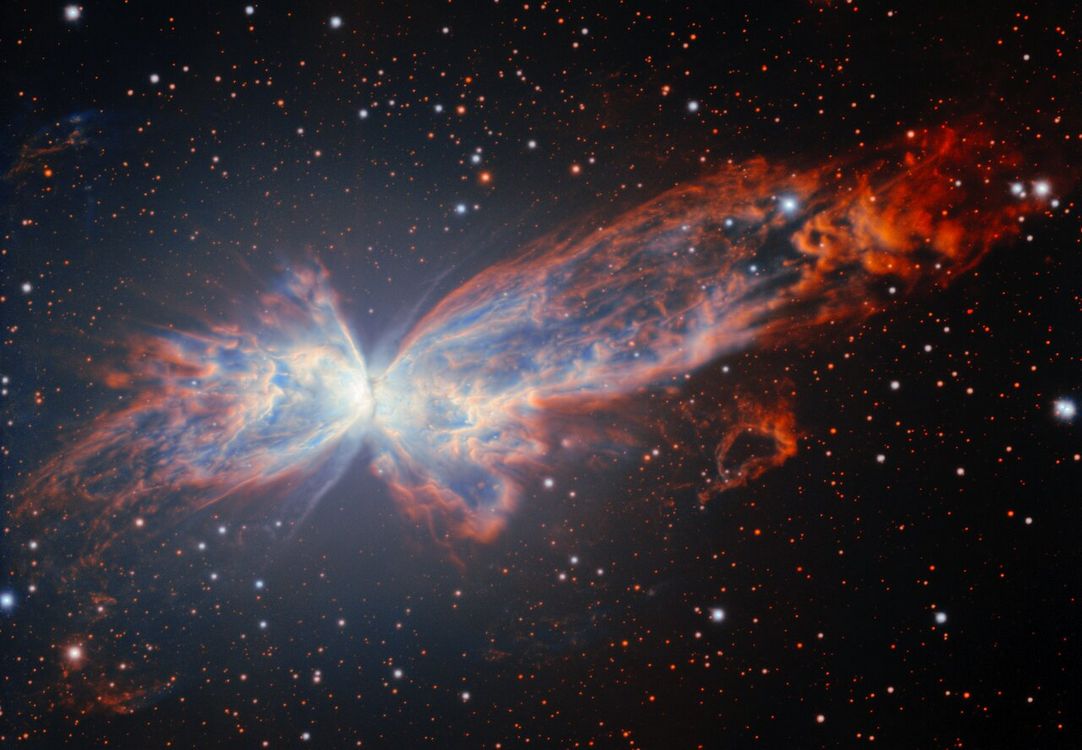
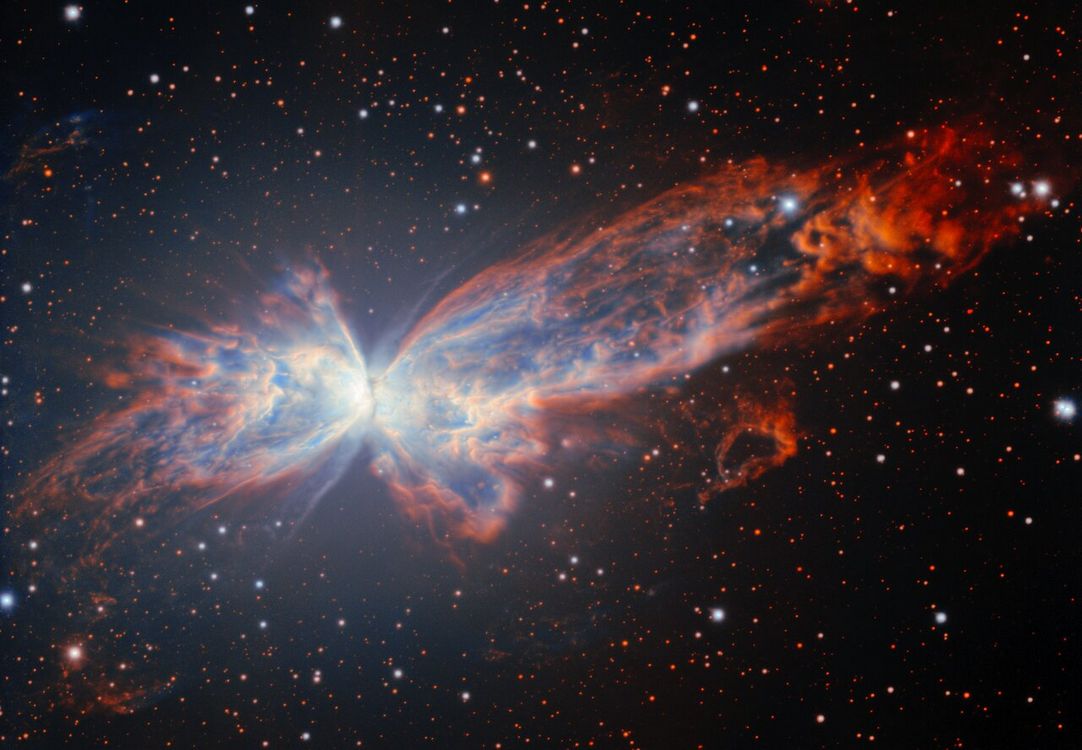
There needs no explaining the name of this nebula—seen in an image taken from the Gemini South Telescope in Chile.
Located between 2,500 and 3,800 light years away in the constellation Scorpio, the Butterfly Nebula is made up of a really rather unique white dwarf star that around 2,000 years ago began pushing away its outer layers into a hot shell of ionized gas.
This is how what are known as planetary nebulae form: the shell of gas is expelled from a host star and creates a rough sphere of ejected stellar material. This star however, is casting out the gas and dust of its exterior into these long, butterfly wing shapes.
The rich red in the image are areas of energized hydrogen gas, while the stark blue traces areas of energized oxygen gas. The star at the center is actually one of the hottest objects ever recorded, according to the National Science Foundation, which owns 70% of the telescope in Chile, and its cousin, Gemini North, in Hawai’i.
NEWSWORTHY NEBULAE:
Its surface temperatures reach 450,000 degrees Fahrenheit. The heat from the star causes the gaseous “wings” to glow as we see it in the picture, taken in a blend of infrared and optical light that, at some 30,000 degrees Fahrenheit.
This picturesque object was chosen as a target for the 8.1-meter telescope by students in Chile as part of the Gemini First Light Anniversary Image Contest. The contest engaged students in the host locations of the Gemini telescopes to celebrate the legacy that the International Gemini Observatory has built since its completion, marked by Gemini South’s First Light in November 2000.
SHARE This Beautiful And Aptly-Named Nebula With Your Friends Who Love Space…
Leave a Reply